Friday, August 02, 2019

Embedding the Power of Stem Cell Therapies: California's Efforts and the Quest for $5 billion More

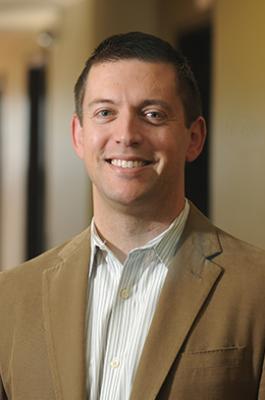
Everett Schmitt, photo by Meg Kumin
California's $3 billion stem cell agency has financed a lot of research that winds up as dense, inaccessible articles -- at least to the general public -- in costly scientific journals with imposing pay walls.

Sometimes, however, stories of hope and stem cell progress do emerge that are likely to resonate with the state's citizens. They are the folks who voted to create and finance the agency in 2004 and who are expected to be asked again for more billions next year.

One such example involves the cases of Evangelina Padilla-Vaccaro of Corona, Ca., Ronnie Kashyap of Folsom, Ca. From birth they suffered from what is known as the "bubble boy" disease.

Both children were born with severe combined immune deficiency (SCID) that is ordinarily fatal. But as the result of clinical trials that were backed with millions from the stem cell agency, both are still alive today. (See here and here.)

The agency is formally known as the California Institute for Regenerative Medicine (CIRM). It has a blog called The Stem Cellar. Today it published an evocative piece written by the mother of another child with the "bubble boy" affliction. 

In her case, the work that has saved her son's life was not financed by CIRM. But the agency carried her story as a powerful affirmation of the importance of stem cell research, wherever and however it is supported. 

Kevin McCormack, director of communications for the agency, wrote, 
"CIRM's mission is very simple: to accelerate stem cell treatments to patients with unmet medical needs. Anne Klein's son, Everett, was a poster boy for that statement. Born with a fatal immune disorder Everett faced a bleak future. But Anne and husband Brian were not about to give up. The following story is one Anne wrote for Parents magazine. It's testament to the power of stem cells to save lives, but even more importantly to the power of love and the determination of a family to save their son."
Anne Klein's article is just what supporters hope will be embedded in the hearts of voters come November 2020 when the next round of financing for CIRM will be on the ballot. 
These sorts of stories, however, have received little attention in the mainstream media, whose reporting resources are ever-diminishing. The media are hard-pressed financially and otherwise nowadays as their once highly profitable business models have been hard hit by the impact of the Internet. 
Nonetheless the agency is assiduously pumping out information and stories on what it calls its value proposition. Here is the final line in the item that CIRM published today:
"You can read about the clinical trials we are funding for SCID herehere, here and here."

Thursday, August 01, 2019

Unregulated Stem Cell Treatments Targeted by California Medical Board; Hearing Next Week

"Snake oil" stem cell clinics in California and their physician operators are on the agenda next week of state medical regulators as deep concerns are being raised in Congress about the slow pace of federal action against the enterprises. 

Last week, a bipartisan group of leaders of a U.S. House of Representatives committee told the Food and Drug Administration (FDA) in a letter, 
"We appreciate the actions taken by FDA, but this pattern of unsafe and unproven therapies remains deeply concerning. Such treatments not only pose public health risks for patients, but also harm the future promise held by the development of stem cell therapy as a field."
California also has been slow in dealing with the issue. State legislation to deal with the matter has been shunted aside.  More than a year ago, the state's Medical Board created a task force to deal with the issue. The panel did not hold its first meeting until June 27 of this year and then with no public notice. 

Experts who follow growth of the dubious clinics say more than 1,000 exist in the United States. The largest number are in California. The treatments are unproven and cost desperate patients thousands of dollars. The clinics have been linked with several cases of blindness and at least 12 serious infections. The FDA has filed lawsuits against two, including one in California, and sent 45 letters to clinics involving their practices. 

The agenda for next week's state medical board meeting says only that an "update" will be delivered by the task force which consists of two members of the board, Randy Hawkins and  and Howard Krauss. No action was specifically listed for the agenda item (No. 21), but the board couches its agenda in such fashion that it could legally act on any matter before it. 

The Congressional letter to the FDA not only expressed serious concern about the proliferation of unproven therapies,  but also said, 
"The advertising strategies some of these clinics employ to attract some of the most vulnerable patients are particularly alarming. Some have advertised stem cell treatments to desperate patients with the most serious untreated illnesses, such as spinal injuries, Parkinson's disease, and multiple sclerosis. Some clinics have misled patients into believing that the therapies they offer are FDA approved or that they are being offered as part of an FDA sanctioned clinical trial."
The chairman of the board of California's $3 billion stem cell agency, Jonathan Thomas, has called the treatments "snake oil." The agency, formally known as the California Institute for Regenerative Medicine (CIRM), is running out of cash. It is worried that a move to refinance the agency via a ballot measure next year could be harmed by voter confusion about the stem cell research.

The congressional letter said,
"When providers offer harmful, unproven stem cell therapies outside of the clinical setting, they create confusion among patients and undermine public confidence in treatments that have been proven to be safe and effective through well-designed clinical trials. If we are to realize the potential clinical benefits of stem cell therapies, it is crucial that developers focus their efforts on the use of traditional developmental pathways that yield definitive results rather than promoting products with 'dubious clinical efficacy and possible risks.'"
Next week's meeting is open to the public. Letters to the board can be emailed to executive director, Kimberly Kirchmeyer, at Kimberly.Kirchmeyer@mbc.ca.gov.

Wednesday, July 24, 2019

The "Hard Case" of Stem Cell Sound Bites and a Campaign to Raise Billions

The journal Nature today reported on the $5.5 billion plan to save what it called the "struggling" California stem cell agency, which is fast running out of cash for new research awards. 

In an article by Jonathan Lambert, Nature caught up with news that it is not so new to readers of this web site. 

The piece carried information from Robert Klein, who expects to lead a new ballot initiative effort late next year to provide the billions more for the California Institute for Regenerative Medicine (CIRM), as the agency is formally known. 

Nature also had this from a man who served on the Institute of Medicine team that evaluated the California program in 2012.
Aaron Levine, Georgia Tech photo
"Aaron Levine, a science-policy researcher at the Georgia Institute of Technology in Atlanta, says that CIRM has put California at the center of stem-cell research worldwide. 'CIRM has been really important in driving stem-cell research forward, especially in the preclinical and proof-of-concept space,' he says. 
"But he isn’t sure whether that will convince voters to keep supporting the agency." 
The Nature article continued,
"'It will be interesting to see if the campaign is one of promised cures, or something a bit more nuanced,' says Levine. 'It takes time for a whole new field of research to result in cures, but that’s a hard case to make to voters in short sound bites.'"
Nature said Klein told it that he will form a non-profit lobbying arm in October or November to help support the campaign next year. 

The journal also said changes in the stem cell research program were anticipated in the new ballot initiative.  
"These include creating a dedicated staff of 10–15 people who would work with insurance companies and patients to improve access to clinical trials and future therapies."

Tuesday, July 23, 2019

UC Researcher on Stem Cells and California's Stem Cell Agency

The California stem cell agency recently highlighted a brief look at the field with a Q&A that ranged from the impact of the agency itself to dealing with questions about "miraculous" stem cell "cures."

The item appeared on the agency's blog and originated at UC Davis, which is among the top five recipients of funds from the agency, known formally as the California Institute for Regenerative Medicine (CIRM).

The school has received $143 million, making it fifth on the list of recipients in terms of dollars.

The Q&A involved Jan Nolta, head of the stem cell program at UC Davis. Some excerpts from what Nolta had to say:

Jan Nolta, UC Davis photo
"Perhaps the most promising and exciting research right now comes from combining blood-forming stem cells with gene therapy. 
"Along with treating the famous bubble baby disease, where I had started my career, this approach looks very promising for sickle cell anemia. We’re hoping to use it to treat several different inherited metabolic diseases.... 
"The beauty of this therapy is that it can work for the lifetime of a patient. All of the blood cells circulating in a person’s system would be repaired. It’s the number one stem cell cure happening right now. Plus, it’s a therapy that won’t be rejected. These are a patient’s own stem cells. It is just one type of stem cell, and the first that’s being commercialized to change cells throughout the body."
About the five Alpha stem cell clinics initiated by CIRM, Nolta said,
"These are clinics where the patients can go for high-quality clinical stem cell trials approved by the FDA [U.S. Food and Drug Administration]. They don’t need to go to 'unapproved clinics'a and spend a lot of money. And they actually shouldn’t."

Thursday, July 18, 2019

California Medical Regulators Take Up Dubious Stem Cell Clinics Next Month

The California State Medical Board next month will discuss clinics that offer unregulated "stem cell" treatments that have allegedly led to blindness and tumors in some cases. 

The meeting comes a year after the board created a "task force" to address the issue.  It also comes as more news emerged this month concerning what was described as a "gruesome case" of an unregulated treatment that went wrong and a step-up in legal action against a La Jolla clinic. 

Canada this week also told dozens of clinics to stop selling unproven stem cells.

California is the location of the largest number of these dubious clinics in the United States, according to UC Davis stem cell researcher Paul Knoepfler and Leigh Turner of the University of Minnesota. The total nationally is currently believed to be more than 1,000. 

State legislation to regulate them is on the shelf in Sacramento. The state medical board formed a two-person task force last July to address the matter. The task force only recently held its first meeting on June 27. 

Queried by the California Stem Cell Report about the status of the board's work, Carlos Villatoro, a board spokesman, said this week, 
"There will be an update on the Stem Cell Task Force at the August meeting, as the Task Force has met. In addition, an interested parties meeting is being scheduled for early September."
The task force met with no public notice, which Villatoro said was not legally required. 

Villatoro has said that the board does not regulate clinics -- only physicians and some other medical professionals. The board describes itself as a consumer protection agency. 

(Here are links to what the board describes as a "complete listing" of laws dealing with its regulatory powers: California Law and Guide to the Laws Governing the Practice of Medicine by Physicians and Surgeons.)

The board meeting next month will be in Burlingame Aug. 8 and Aug. 9.  The agenda has not been posted, but the meeting is expected to streamed on the Internet. 

Search This Blog