Tuesday, April 16, 2019

Going Slow in California on Stem Cell "Snake Oil"

California Attorney General Xavier Becerra is remaining mum on regulation of "snake oil," stem cell clinics as the Golden State pursues a go-slow approach to cracking down on the dubious treatments.

More than 100 such clinics are operating in California, the most of any state in the nation. New York state earlier this month took the lead among states in attempting to regulate the clinics, which the chairman of California's $3 billion stem cell agency, Jonathan Thomas, has described as peddling "snake oil."

New York Attorney General Letitia James filed a lawsuit earlier
Letitia James
NY Department of Justice photo
this month charging that the treatments at one clinic amounted to fraud. She said in a news release,

“Misleading vulnerable consumers who are desperate to find a treatment for serious and painful medical conditions is unacceptable, unlawful, and immoral. 
“We will continue to investigate these types of clinics that shamelessly add to the suffering of these consumers by charging them thousands of dollars for treatments that they know are unproven.”
The businesses number more than 700 nationwide and have treated an estimated 20,000 persons. The clinics sell products that they say are stem cells for use as treatments for problems ranging from erectile dysfunction to cancer. The treatments lack rigorous scientific testing and cost thousands of dollars. In some cases in Florida, they have resulted in blindness. Other serious injuries have been reported elsewhere.

In the wake of the New York action, the California Stem Cell Report, on April 5 and again on April 11, queried the California attorney general's office about his position on the dubious clinics. However, Becerra's office has failed to respond.

The web site of the state Department of Justice, which is headed by Becerra, says, however,

"The Department of Justice will put patients first in a more quality health care system. We achieve this by protecting patients from bad actors...."
Other California state entities have expressed concern about the unregulated clinics but also offer only a slow schedule for action, if any.

Six months ago, the state Medical Board, which regulates physicians, created a task force to look into problem. Asked recently about the task force's progress since October, Carlos Villatoro, spokesman for the board, responded briefly,
"The board is gathering information for the Stem Cell and Regenerative Therapy Task Force and has set a goal to have its first meeting in late May, early June."
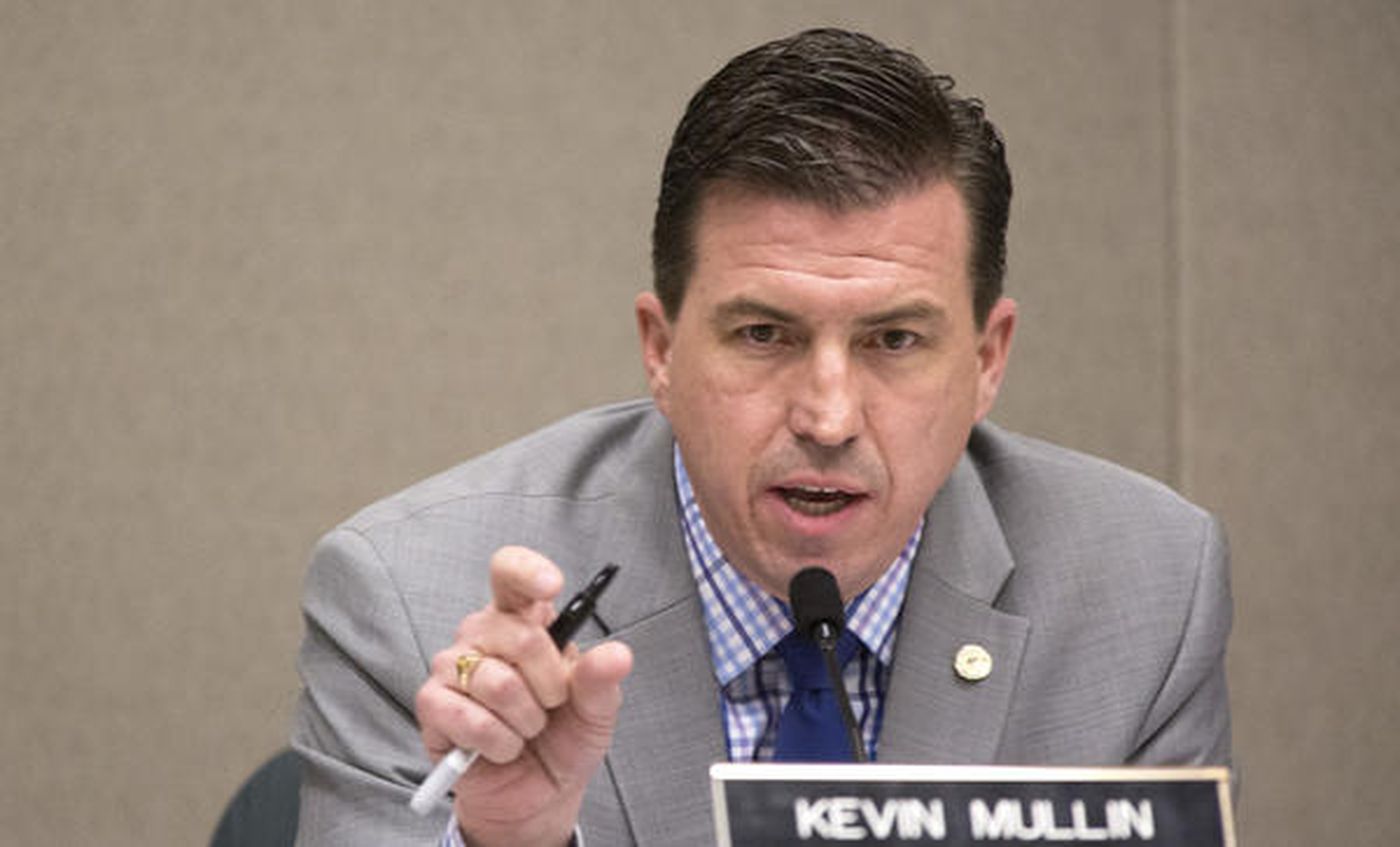
In the legislature, Assemblyman Kevin Mullin, D-San Mateo, has introduced a measure to deal with the clinics. His bill, if it is passed and signed into law, would not take effect until next January. It would direct the state Department of Public Health to hold hearings sometime next next year in order to craft possible legislation to directly regulate the clinics. 

A new regulatory panel called the Stem Cell Clinic Regulation Advisory Group would be created. After members are named and organized, it would have the ability to enact "emergency" regulations on a 90-day notice after it has consulted with "the medical community, bioethicists, legal scholars, and patient advocacy groups."

The legislation (AB617) is scheduled to receive its first hearing in the Assembly Health Committee April 23.


The unregulated stem cell clinics have been in business for years. Their dubious treatments and sales pitches have been well documented. UC Davis stem cell scientist Paul Knoepfler has been particularly active. He and Leigh Turner of the University of Minnesota were the first to document the full scope of the clinics in a groundbreaking study in 2016.

In recent years, the Food and Drug Administration (FDA) has become more active. In the case of one California firm, Cell Surgical Network, which has been in business since 2010, the FDA sued the firm last May alleging that it had, among other things, used a smallpox vaccine to create an unapproved stem cell product. The product was injected directly into tumors in persons with potentially compromised immune systems, the FDA said.

Sunday, April 14, 2019

The NY Times Details Stanford Scientist's Communications in the Gene-Edited Babies Controversy

The New York Times this morning carried a front page story dealing with Stanford University, scientist Stephen Quake and gene-edited babies in China. 

Stephen Quake
Chan Zuckerberg Biohub photo
The story appears to the first time that Quake, who is the Lee 
Otterson professor of bioengineering and professor of applied physics at Stanford as well as co-president of the Chan Zuckerberg Biohub, has spoken at length publicly about his role in the matter of the Chinese children, who are the first gene-edited babies to be born. 

Their announcement last fall created an international brouhaha about the ethics and science of the work by He Jiankui, who once worked in Quake's Stanford lab. 

Times reporter Pam Belluck began her story like this
"'Success!' read the subject line of the email. The text, in imperfect English, began: “Good News! The women is pregnant, the genome editing success!' 
"The sender was He Jiankui, an ambitious, young Chinese scientist. The recipient was his former academic adviser, Stephen Quake, a star Stanford bioengineer and inventor. 
"'Wow, that’s quite an achievement!' Dr. Quake wrote back. 'Hopefully she will carry to term...'"
Stanford is investigating Quake's ties and communication with He. The Times reported that the school has received a complaint from the president of He's Chinese university, alleging that Quake “violated the internationally recognized academic ethics and codes of conduct, and must be condemned.”

In the Times article, Quake, who is participating in a $40 million genomics program backed by the $3 billion California stem cell agency, denied the allegations. Quake said his interactions with He have been misinterpreted. 

The Times wrote, 
"'I had nothing to do with this, and I wasn’t involved,' Dr. Quake said. 'I hold myself to high ethical standards.'
"Dr. Quake showed The Times what he said were the last few years of his email communication with Dr. He. The correspondence provides a revealing window into the informal way researchers navigate a fast-moving, ethically controversial field."

Friday, April 05, 2019

Crackdown on Stem Cell Snake Oil: California's Approach vs. New York's

An attempt in the California legislature to take limited and preliminary action to regulate "snake oil" stem cell clinics stands in sharp contrast to this week's legal action by New York state's attorney general.

California's Assembly Health Committee has scheduled an April 23 hearing on the bill (AB617) by Assemblyman Kevin Mullin, D-San Mateo. Supported by the $3 billion state stem cell agency, it would require the state Department of Health to look into the dubious clinics next year and make recommendations to the legislature.

The legislative hearing comes as New York state attorney general Letitia James announced a lawsuit yesterday against a New York business that has performed what she said are unproven and rogue procedures on patients. 

The enterprise is called Park Avenue Stem Cell. A New York Times article by Reed Abelson said, 
"According to (New York) state regulators, Park Avenue Stem Cell also had ties to a California business, Cell Surgical Network, with roughly 100 affiliates around the country, that was sued by the F.D.A. (the Food and Drug Administration) last year. The federal agency is seeking a permanent injunction against Cell Surgical Network...."
California is taking a slower and more limited path than New York.  Mullin's legislation would do little to halt activity by the clinics this year. California's attorney general, Xavier Beccera, has not spoken out publicly on the issue. The state medical board has created a task force to look into the problem but it is unclear whether it has made any headway.

California has the largest number of the clinics, more than 100, according to a 2016 study and its authors. The New York Times said the businesses "offer people treatments that cost thousands of dollars, which patients typically pay out of pocket because health insurers refuse to cover the therapies. Some products have proved dangerous to patients, blinding some and causing severe infections in at least a dozen people."

UC Davis stem cell researcher Paul Knoepfler and Leigh Turner of the University of Minnesota were the first in the nation in 2016 to document the full scope of what the chairman of the state stem cell agency, Jonathan Thomas, has dubbed a "snake oil" industry. 

Regarding the New York lawsuit, Knoepfler was quoted by the Washington Post as saying, 
"The unmistakable message is that the firms' time to come into compliance is rapidly running out."

Wednesday, April 03, 2019

"Natural Killer" Cells Score Points for $10.6 Million California Stem Cell Investment

This item has been removed because of inaccuracies in its reporting. The information in the item is under review.

Monday, April 01, 2019

The Quest for Stem Cell 'Franchise Players:' California's $47 Million Recruitment Program


 Robert Weschler-Reya briefly discusses some of the implications of his research.

Nine years ago this month, the California stem cell agency kicked off a $47 million recruiting effort to lure star stem cell scientists to the Golden State in what was then an even more fledgling field than it is today.

The first recipient was Robert Weschler-Reya, who left Duke University to join the Sanford Burnham Prebys Medical Discovery Institute in La Jolla, Ca. Weschler-Reya surfaced again last week in an item on the stem cell agency's blog, The Stem Cellar, which discussed the research that he hopes will help children with a deadly brain cancer.

Back in April 2010, directors of the state's $3 billion stem cell agency awarded nearly $6 million to Weschler-Reya. But it took him months to make the decision to come to California. (For more on the process see here and here.)

Ultimately, the agency helped to bring eight other scientists to California through the recruitment effort. All of the awards in the program benefited institutions with past or present representation on the agency's governing board. Those directors could not vote on specific grants to their institutions, but they all voted in favor of creating the recruitment effort.

The overall approach was approved in 2009 by directors of the agency, known formally as the California Institute for Regenerative Medicine (CIRM). Backers said it would lure "paradigm-shifting," "franchise players" to the state.

CIRM Director William Brody, then head of the Salk Institute in La Jolla but also a former president of John Hopkins University in Maryland, said that when California voters created the stem cell agency in 2004,
"I was sitting in Baltimore (and) the big concern was that there would be this big sucking sound for the senior people. And that, by and large, I don't think has happened because there's not been an appropriate mechanism to bring them, and I think this would do that."
As for Weschler-Reya, CIRM quoted him on its blog last week as saying that his research has developed "a valuable tool that will increase our understanding of the biology of the cancer and allow us to identify and test novel approaches to therapy. This advance brings us one step closer to a future where every child survives—and thrives—after diagnosis with CPC (choroid plexus carcinoma).

In his year-seven report on his CIRM research, Weschler-Reya said,
"The goal of our studies has been to elucidate the role of stem cells in development, regeneration and tumorigenesis in the cerebellum. We have made significant progress towards this goal during the course of our work.
"Our studies have provided insight into the types of cells derived from cerebellar stem cells during development, and shown that cerebellar stem cells can serve as cells of origin for pediatric brain tumors. Moreover, we developed several new stem cell-based animal models of pediatric brain tumors, and used them to study mechanisms driving tumorigenesis and metastasis. Importantly, we also used these models to screen for compounds that might be effective inhibitors of tumor growth, and identified a number of promising candidates. 
"Our long-term goal is to move these agents toward clinical trials, to improve outcomes for pediatric brain tumor patients."
Here is a list of all the recipients in CIRM's recruitment program. 

InstitutionResearcher nameGrant TitleAward Value
University of California, BerkeleyXavier DarzacqSingle Molecule Biophysics and Biology of Cellular Identity$4,247,155
Gladstone Institutes, J. DavidTodd McDevittEngineering microscale tissue constructs from human pluripotent stem cells$5,884,058
University of California, Los AngelesJohn ChuteNiche-Focused Research: Discovery & Development of Hematopoietic Regenerative Factors$5,174,715
Cedars-Sinai Medical CenterBarry StrippEpithelial progenitors and the stromal niche as therapeutic targets in lung disease$4,841,830
Stanford UniversityHiromitsu NakauchiGeneration of functional cells and organs from iPSCs$5,427,512
University of California, San DiegoEric AhrensMolecular Imaging for Stem Cell Science and Clinical Application$5,920,899
University of Southern CaliforniaAndrew McMahonRepair and regeneration of the nephron$5,672,206
University of California, Santa BarbaraPeter CoffeyDevelopment of Cellular Therapies for Retinal Disease$4,690,963
Sanford-Burnham Medical Research InstituteRobert Wechsler-ReyaThe role of neural stem cells in cerebellar development, regeneration and tumorigenesis$5,226,049
47085387

Friday, March 29, 2019

Backed by California Stem Cell Agency: $5 Million Measure for Spinal Cord Research Advances in Sacramento

Legislation supported by stem cell research advocates to provide $5 million for work on spinal cord injuries easily cleared its first hurdle this week in Sacramento.

On a 15-0 vote, the proposal, AB 214, was approved Tuesday by the Assembly Health Committee and sent to the Appropriations Committee for placement on the "consent calendar."  Such a move could speed action on the bill.

Assemblyman Kevin Mullin, D-San Mateo, authored the bill, which is backed by Americans for Cures, the Palo Alto stem cell advocacy group created by Bob Klein, the first chairman of the $3 billion California stem cell agency.

The agency, known formally as the California Institute for Regenerative Medicine (CIRM), is also listed as a supporter of the legislation. Other supporters included Aivita Biomedical of Irvine, Ca, the California Life Sciences Association and the Miami Project to Cure Paralysis.

The CEO of Aivita is Hans Keirstead, a stem cell researcher formerly with UC Irvine.

No opposition was listed in the legislative staff analysis of the bill.

The measure provides $5 million to support the Roman Reed Act of 1999, named after a man who was paralyzed as the result of a spinal cord injury. Roman and his father, Don Reed, are long-time backers of the stem cell agency's work.  The elder Reed is a vice president of Americans for Cures.

The legislative analysis carried this comment sourced to the bill's author:
"The previous allocations of approximately $15 million in state funding to the Roman Reed program was leveraged over five times that amount in new grants benefiting spinal cord research all across the state. It’s time to reinstate a modest amount of state funding so these efforts can continue."

Sunday, March 24, 2019

California Legislation Targets Unregulated "Stem Cell" Clinics but Not Until Next Year

Legislation that may lead to regulation of dubious stem cell clinics is now before California lawmakers, but it is not likely to result in action until sometime next year at the earliest. 

Assemblyman Kevin Mullin, D-San Mateo, announced the measure (AB617) last week. He said in a news release
Kevin Mullin, LA Times photo
“It is clear that more must be done to ensure the proper regulation of for-profit stem cell clinics."
More than 100 unregulated "stem cell" clinics exist in California and hundreds more throughout the nation. They use what they describe as stem cells in untested treatments that cost thousands of dollars. A number of injuries, including blindness, have been reported. (See here, here, here and here.)

Jonathan Thomas, chairman of the $3 billion California stem cell agency, told its governing board last week that the clinics were peddling "snake oil."

Mullin's bill would create an advisory board within the state Department of Public Health to study the problems involving unregulated stem cell clinics and make recommendations to the legislature. 

The panel would also have the power to enact emergency regulations. If passed by the legislature this year, it would not take effect until next January. In addition to requiring hearings, the board could not implement emergency regulations without at least a 90-day waiting period.

Art Torres

Asked for comment on the legislation, Art Torres, vice chairman of the state stem cell agency and a former state lawmaker, told the California Stem Cell Report that he would withhold remarks on the bill until  "we work out final language/amendments before its first hearing in April."

Generally, proposed laws, including Mullin's measure, do not take effect until January of the following year after they are approved by both houses of the legislature and signed by the governor. 

Legislation that has "urgency" status can go into effect immediately, but such measures require a two-thirds vote of both houses instead of a simple majority. Securing a two-thirds vote can sometimes be difficult. 

The problems surrounding unregulated clinics have existed for years, but received little attention at the state or federal level until UC Davis researcher Paul Knoepfler and Leigh Turner of the University of Minnesota documented the scope of the business in 2016.

California's state medical board, which regulates physicians, is also looking into the unregulated clinics.

Thursday, March 21, 2019

Down to its Last $67 Million: California Stem Cell Agency Awards $4 Million to Improve Bone Healing


A look at the the spinal affliction targeted by CIRM-backed research. Video by NuVasiveInc

OAKLAND, Ca. -- California's state stem cell agency is down to its last $67.3 million following a decision today to back research to enhance bone healing in elderly patients who undergo spinal surgery.

The $4 million award went to Ankasa Regenerative  Therapeutics following little discussion among members of the governing board of the $3 billion California Institute for Regenerative Medicine or CIRM, as the stem cell agency is known. 

Ankasa, which has locations in La Jolla and South San Francisco, is supporting the award with a matching amount of $1 million. Sandy Madigan, CEO of Ankasa, told the California Stem Cell Report that his firm has raised $19 million in venture capital. Its only current potential product, he said, is tied to the CIRM-backed research, which the agency has previously funded with $8.6 million. 

(See here and here for more on the Ankasa work.)

CIRM said at today's meeting that the award leaves the agency with $67.3 million for research for the remainder of the year. It has budgeted a total of $93 million for clinical stage awards this year.

The stem cell agency was created in 2004 with $3 billion in funding. It expects to run out of cash for new awards later this year. CIRM is seeking to raise $220 million privately to tide it over until November 2020, when it hopes voters will approve another $5 billion in funding through the use of state bonds. 

CIRM board Chairman Jonathan Thomas did not report at the meeting today on the status of the private fundraising effort. 

The only significant source of cash for the agency is the $3 billion in bonds approved by voters in 2004 via the ballot initiative process. The 2020 effort would also involve a ballot initiative. 

The deadline for filing such a measure is Aug. 19. That would set the stage for actually gathering the 585,407 valid  signatures needed to qualify for placement on the ballot. 

Today's award was approved Feb. 28 behind closed doors by the agency's out-of-state reviewers, who sent it to the CIRM board for routine ratification. 

The six-page, CIRM summary of the review said the proposal (CLIN1-11256) addresses "the need for a spinal fusion material that can increase the chance for a solid bony union in the lumbar spine." The review said, "There are other products on the market that fulfill this need but have safety concerns that have been raised in the past."

Jill Helms, chief scientific officer of Ankasa and a professor at Stanford University, led the research backed by CIRM. 

The review summary said the proposed treatment could have application in other areas as well. It is likely to be some years before the procedure would be widely available. Today's award supports efforts by Ankasa to gain federal approval to begin clinical trials.

See here for the CIRM press release on the award. 

Thursday, March 14, 2019

Making 'Stem Cell Lemonade' in California

Trump visiting lab in China in 2017, whose research output is
surpassing the U.S.
 Photo: Andy Wong/AFP/Getty Images
California's $3 billion stem cell agency has what some might call an "unconscious" ally in its search for more billions to fuel its drive to create stem cell therapies and cures.

It is no small matter. The agency expects to run out of cash for new awards by the end of this year. It is hoping that voters will approve, in November of 2020, another $5 billion to carry on with its 14-year-old program, which is a pretty big ask.

Now comes President Trump with his latest proposed budget, which whacks away at scientific research. He is seeking to slash as much as $6 billion from the National Institutes of Health, the chief source of research funding in the country.

The American Association of Immunologists said this week that Trump's cuts “would devastate important research intended to prevent, treat, and cure innumerable diseases."


Trump's cuts play into a narrative that worked successfully in 2004 when California voters created the stem cell agency with 59 percent of them voting for Proposition 71. The campaign pushed the ballot initiative with the argument that then President Bush was crippling stem cell research and thus preventing development of new, nearly miraculous therapies.

Like Bush, Trump is something of a scientific villain, so to speak, one that can be used as a foil to convince the people of California to provide more money for stem cell research. Never let good villain go to waste might be the marching orders for the 2020 ballot campaign.

If not for California and its stem cell agency, voters would be told, children would have died (see here and here) and more than 50 clinical trials for stem cell treatments would have not existed.

It is no matter that Congress may not go along with Trump's reductions. The threat, which is likely to continue as long as Trump is president, is sufficient to fuel a ballot campaign.

Obviously, cuts in federal research funding are not something the scientific and biotech community applauds. Nonetheless, they could be picked apart to find morsels to feed a ballot campaign. The agency's backers might even say, "When the president gives you stem cell lemons, make stem cell lemonade."

Search This Blog